1. Introduction
For property rental agencies operating within the United Kingdom, holiday let portfolios require substantial coordination. Managing guest requests, coordinating cleaning turnovers, and confirming bookings across multi-channel structures like Airbnb, Booking.com, and Vrbo can quickly overwhelm staff. While agencies focus on maximizing revenue, a vital business stakeholder is often left in the dark: the individual property owner.
Property owners rely on booking information to plan their own visits, schedule routine property maintenance, and keep track of their income. Manual communication—sending emails or SMS messages for every booking change—wastes valuable operational time. To build efficient B2B procedures, property managers are adopting structured formats. This practical guide covers how Vrbo iCal sync works for UK rental agencies, how to establish robust flows, and how automated alerts can elevate client retention.
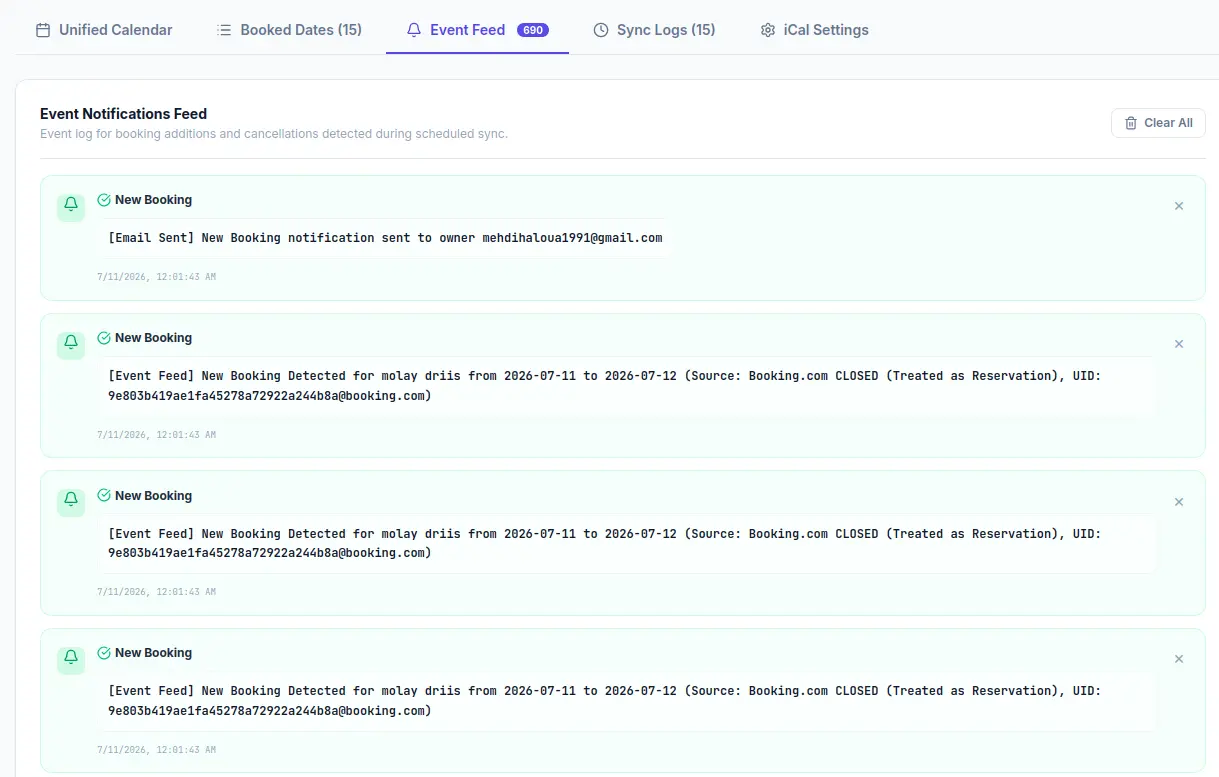
OwnerPing helps rental agencies monitor connected iCal feeds across properties using a clean scheduled-sync workflow.
2. What is Vrbo iCal Sync?
Vrbo iCal sync is a feature that allows property managers to export dates blocked by guest bookings in a universal format. Built on the RFC 5545 internet calendar standard, the exported plain-text file (ending in .ics) contains chronological blocks of reserved dates. Any external system can periodically request this URL, parse the text blocks, and determine when a property is booked.
When you list a holiday let on Vrbo, the system automatically exposes a read-only calendar feed link. By utilizing scheduled synchronisation, third-party utilities can periodically check this feed to detect changes. It is essential to note that iCal files contain zero personal guest information or sensitive financial details, keeping the calendar data lightweight, quick to transfer, and safe to share.
3. Why Rental Agencies Use Vrbo iCal Export Links
Property managers prioritize simplicity when configuring property management tools. Setting up native API endpoints for multiple platforms requires specialized developer resources, security tokens, and ongoing maintenance. In contrast, an iCal export link can be copied from the Vrbo host panel and connected in under a minute.
Furthermore, Vrbo iCal links are universally supported. They represent a cost-effective, read-only mechanism to keep third-party services updated on schedule. Because the configuration does not require sharing administrative account passwords, it provides a safe integration method for external services. For agencies also managing Booking.com listings, learn more in our detailed Booking.com iCal export guide for UK agencies.
4. How Vrbo iCal Fits into a Multi-Channel Calendar Workflow
Most UK property management teams list each listing across multiple online travel agencies (OTAs) to optimize occupancy rates. An agency might advertise a single luxury cottage in the Cotswolds on Airbnb, Booking.com, and Vrbo simultaneously. To prevent calendar overlap, they feed these calendars into a central hub.
By linking the Vrbo read-only feed into a centralized calendar parser alongside feeds from other OTAs, the agency creates a unified master timeline. When a booking occurs on Vrbo, the synchronized feed reflects this block, prompting the booking manager to update other platforms. This structure keeps all channels updated using simple, read-only calendar export URLs.
5. What a Vrbo iCal Feed Can Usually Include
When an external system fetches a Vrbo iCal feed, the raw data displays a series of VEVENT blocks. Each event block represents a distinct period where the calendar is blocked. The feed contains key calendar variables, such as:
- DTSTART: The check-in date indicating when the reservation block begins.
- DTEND: The check-out date indicating when the reservation block ends.
- UID: A unique reservation identifier generated by Vrbo, critical for comparing feed changes.
- SUMMARY: A basic title indicating that the slot is reserved, usually formatted as "Reserved" or "Vrbo Reservation".
Crucially, guest names, private phone numbers, guest emails, and payment breakdowns are completely omitted. This keeps the feed private, light, and secure.
6. Why iCal Feeds Are Useful but Limited
While iCal links are highly accessible and reliable, they are fundamentally designed as read-only, periodic synchronization feeds rather than instant APIs. This distinction is critical for setting proper operational expectations within your team.
Unlike real-time webhooks, iCal feeds are static files hosted on Vrbo servers. External monitoring software must periodically check the URL on a scheduled interval. The feed does not transmit push notifications; instead, the tracking software must download and compare the feed data against its database to detect changes. Additionally, because the feed lacks contact details, it cannot be used to manage guest check-ins directly.
7. Common Problems with Vrbo iCal Workflows
Agencies attempting to build custom internal scrapers or manually check feeds often run into operational bottlenecks. One major issue is the sync frequency. Checking feeds too frequently can lead to rate-limiting errors, while checking them too infrequently increases the risk of delayed information.
Another common challenge is handling booking changes. When a guest modifies their arrival date on Vrbo, the DTSTART value changes inside the existing event. Without a smart, database-driven comparison engine, basic parsers may misinterpret this change, sending inaccurate notifications or failing to log the edit.
8. Why First Sync Should Be Treated as a Baseline
When you connect a property calendar to an automated notification system for the first time, the platform fetches dozens of pre-existing bookings. To the tracking engine, these pre-existing bookings appear as "newly discovered" entries.
If the notification system immediately dispatched alerts for all these bookings, the property owner would be spammed with dozens of duplicate messages for past and pre-existing reservations. To prevent this, the first sync must be treated as a baseline. The system imports the existing blocks silently, creating a baseline snapshot. Notifications are only triggered when future changes, new bookings, or cancellations occur.
9. How Owner Notifications Help Agencies Reduce Manual Follow-Up
Automating owner notifications is a game-changer for UK holiday let agencies. Instead of assigning staff to write manual emails for every Vrbo reservation change, an automated system listens to the connected feeds and dispatches clean, structured alerts.
This automation ensures that property owners receive consistent, accurate updates without delay. Landlords stay informed, and agency staff can focus on guest services and portfolio growth, rather than administrative tasks.
10. Email vs WhatsApp Updates for Property Owners
Agencies often debate which channel is best for owner communications. Traditional email remains highly effective for sending formal monthly summaries, detailed statements, or non-urgent updates. Email provides a reliable paper trail that landlords can review from their computers.
However, for urgent booking updates or quick cancellations, email is often too slow. WhatsApp offers near-instant open rates. Landlords receive WhatsApp notifications directly on their mobile phones, allowing them to coordinate cleaning teams or lock their private calendars on the go. Offering both options provides property owners with a premium, tailored experience. Learn more about optimizing cancellation alerts in our companion piece: booking cancellation notifications for property owners.
11. Using Airbnb, Booking.com, and Vrbo iCal Feeds Together
A resilient multi-channel workflow requires connecting all active listing feeds. Connecting only one channel leaves major booking gaps, causing confusion if a guest books via a different platform.
By connecting Airbnb, Booking.com, and Vrbo iCal feeds concurrently, you establish comprehensive coverage for each property. A robust tracking engine filters duplicate blocks, provides a single dashboard view, and keeps owners updated regardless of where the booking originated. For more details on Airbnb configuration, refer to our guide on Airbnb iCal sync for rental agencies.
12. When OwnerPing Is Useful for Rental Agencies
OwnerPing is built specifically for property managers and holiday let operators who need to automate owner communications. By monitoring connected iCal feeds on a scheduled basis, OwnerPing detects new reservations and cancellations automatically.
With OwnerPing, agencies can assign a specific owner email and phone number to each property, ensuring notifications are routed correctly. By automating these updates, agencies can scale their portfolios without increasing their administrative workload.
13. Frequently Asked Questions (FAQs)
Do I need a Vrbo password to use an iCal feed?
No, you do not. iCal feeds are public, read-only links provided by Vrbo. Sharing your login details or password is dangerous and violates security practices. You only need to copy the calendar export link from your Vrbo settings.
Is OwnerPing an official Vrbo API integration?
No, OwnerPing is not an official Vrbo partner and does not use direct Vrbo developer APIs. Instead, it reads the public-facing, read-only iCal calendar feeds that Vrbo provides to export dates.
Can Vrbo iCal feeds show new bookings?
Yes. When a new guest reserves a block on Vrbo, the dates are added to the exported iCal plain-text feed. OwnerPing's scheduled engine periodically fetches this feed, discovers the new dates, and identifies them as a new booking.
Can Vrbo iCal feeds show cancellations?
Yes, they can. When a reservation is cancelled or modified on Vrbo, the corresponding date blocks are removed from the exported calendar. By checking the feed on a scheduled frequency, OwnerPing notices that previously active bookings are no longer present, flagging them as cancellations.
Why should the first sync be treated as a baseline?
Treating the initial sync as a baseline prevents owner spam. When a feed is connected for the first time, all existing historical bookings are imported at once. Dispatched immediately, they would trigger false alerts for old bookings. The baseline ensures only future changes are alerted.
Can OwnerPing notify owners by WhatsApp?
Yes, absolutely. Alongside standard email notifications, OwnerPing can dispatch automated WhatsApp updates to your property owners when configured, ensuring landlords are notified wherever they are.
Can OwnerPing also monitor Airbnb and Booking.com iCal feeds?
Yes, definitely. You can connect and monitor iCal feeds from Airbnb, Booking.com, and Vrbo concurrently for each property, establishing a reliable multi-channel calendar monitoring solution.
Is this useful for UK holiday let agencies?
Yes. It is heavily utilized by holiday let agencies and serviced accommodation operators across the United Kingdom to automate check-in, change, and cancellation communications with their property owners, completely removing manual administration.
14. Conclusion
Automating property owner updates represents a major step forward for modern UK rental agencies. By using scheduled iCal sync to track Vrbo calendar changes, agencies can eliminate manual errors, keep landlords informed, and free up valuable staff time.
OwnerPing offers a specialized, password-free solution for managing these workflows. Learn more about our plans on our Pricing page, or get in touch via our Contact page to start your 14-day trial.
Related guide: Learn how to handle common iCal sync problems for rental agencies.